Tampilkan postingan dengan label money. Tampilkan semua postingan

Selasa, 27 September 2011

Weird celebrity insurance policies

Weird celebrity insurance policies
 Weird celebrity insurance policies, Are the stars pulling our legs, or are their body parts at special risk? Here's a look at some of the unlikely anatomical assets celebrities got covered.

Savvy stars or crazy coverage?
With their paparazzi, bodyguards, mansions and private jets, celebrities live unconventional lives. And you can add one more thing to the list: absurd insurance policies with megabuck payout plans. These are not like typical insurance plans covering your house, car or other valuables. For insurance companies guaranteeing celebrity body parts for sky-high sums of money, the risk is high. But insurance giant Lloyd's of London is famous for taking on big-digit celebrity policies over the years, including insurance on the legs of dancer Fred Astaire and a finger of Rolling Stones guitarist Keith Richards.Lloyd's of London,
Gene Simmons' tongue

Gene Simmons, bassist for the iconic late-'70s band Kiss, added his own signature move sticking out his extra-long tongue to the band's widely recognizable stage presence featuring black-and-white face paint and distinctive jumpsuits. Simmons' tongue, which is said to have been surgically enhanced, was reportedly insured when Kiss was at its peak. gene simmons tongue 7 inches, gene simmons insured tongue $1 million,
Tom Jones' chest hair

Many appearance-conscious men are looking to wax or trim their wayward hair, but pop singer Tom Jones must think a little fuzz is critical to his status as a sex symbol. In 2008, the New York Daily News and several other media outlets reported that Jones had his chest hair insured reportedly for millions. Other sources, however, say it isn't true. tom jones chest hair insured $7 million, tom jones gospel,
Dolly Parton's bust
Country music legend Dolly Parton, who is almost as well-known for her curvy figure as for her singing and acting, reportedly has insured her 42-inch bust. That's pretty good money for a woman who grew up in poverty in an isolated corner of the Great Smoky Mountains. dolly parton insured bust for $600,000, dolly parton one of 12 children,
Keith Richards' middle finger
Several media sources have reported that Keith Richards, the legendarily hard-living guitarist for the Rolling Stones, has insured the middle finger on his left hand. keith richards insured finger for $1.6 milllion,
David Lee Roth's sperm
Going a step beyond the idea of insuring body parts, David Lee Roth, the former lead singer of the rock group Van Halen, decided to put a premium on his sperm with an insurance policy, according to The Independent, a British newspaper. Some say this was a forward-thinking move, guarding against possible paternity suits. david lee roth sperm insurance $1 million, the independent,
Coverage without the cost
It's not always the celebrity who foots the bill. Instead, the insurance policy is often covered by an entertainment company or endorser. For example, Procter & Gamble has an insurance policy on the long, wavy tresses of Pittsburgh Steelers safety Troy Polamalu because the NFL great is the face of the company's shampoo product.

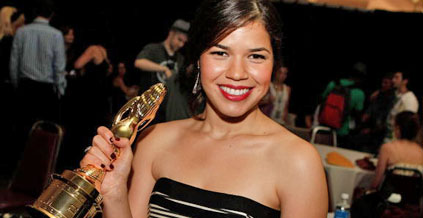
Likewise, Aquafresh toothpaste has insured the teeth of "Ugly Betty" star America Ferrera for millions, making her a poster child for the pearly white smile. Insiders speculate that insuring body parts is a way for a company to get media attention for a celebrity or ignite attention for a brand -- and to increase the overall dollar value of a highly profitable star. Aquafresh america ferrera insured $10 million,
Shirley MacLaine vs. the aliens
OK, so it's not a body part, but it's too wacky not to mention. Storied actress Shirley MacLaine is the owner of one of the most bizarre insurance policies in Hollywood, reports Parade magazine. According to that publication, MacLaine, who has been outspoken about believing in reincarnation and extraterrestrial life, owns a multimillion-dollar policy protecting her acting fortune against an alien abduction. In fact, more than 20,000 people in the United States have forked over insurance money to cover themselves in the event of an alien abduction.

It probably doesn't help MacLaine rest any easier knowing she's not alone, though. Shirley MacLaine insured $25 million agains alien abduction,

Source:  money

Weird celebrity insurance policies


Weird celebrity insurance policies
 Weird celebrity insurance policies, Are the stars pulling our legs, or are their body parts at special risk? Here's a look at some of the unlikely anatomical assets celebrities got covered.

Savvy stars or crazy coverage?
With their paparazzi, bodyguards, mansions and private jets, celebrities live unconventional lives. And you can add one more thing to the list: absurd insurance policies with megabuck payout plans. These are not like typical insurance plans covering your house, car or other valuables. For insurance companies guaranteeing celebrity body parts for sky-high sums of money, the risk is high. But insurance giant Lloyd's of London is famous for taking on big-digit celebrity policies over the years, including insurance on the legs of dancer Fred Astaire and a finger of Rolling Stones guitarist Keith Richards.Lloyd's of London,
Gene Simmons' tongue

Gene Simmons, bassist for the iconic late-'70s band Kiss, added his own signature move sticking out his extra-long tongue to the band's widely recognizable stage presence featuring black-and-white face paint and distinctive jumpsuits. Simmons' tongue, which is said to have been surgically enhanced, was reportedly insured when Kiss was at its peak. gene simmons tongue 7 inches, gene simmons insured tongue $1 million,
Tom Jones' chest hair

Many appearance-conscious men are looking to wax or trim their wayward hair, but pop singer Tom Jones must think a little fuzz is critical to his status as a sex symbol. In 2008, the New York Daily News and several other media outlets reported that Jones had his chest hair insured reportedly for millions. Other sources, however, say it isn't true. tom jones chest hair insured $7 million, tom jones gospel,
Dolly Parton's bust
Country music legend Dolly Parton, who is almost as well-known for her curvy figure as for her singing and acting, reportedly has insured her 42-inch bust. That's pretty good money for a woman who grew up in poverty in an isolated corner of the Great Smoky Mountains. dolly parton insured bust for $600,000, dolly parton one of 12 children,
Keith Richards' middle finger
Several media sources have reported that Keith Richards, the legendarily hard-living guitarist for the Rolling Stones, has insured the middle finger on his left hand. keith richards insured finger for $1.6 milllion,
David Lee Roth's sperm
Going a step beyond the idea of insuring body parts, David Lee Roth, the former lead singer of the rock group Van Halen, decided to put a premium on his sperm with an insurance policy, according to The Independent, a British newspaper. Some say this was a forward-thinking move, guarding against possible paternity suits. david lee roth sperm insurance $1 million, the independent,
Coverage without the cost
It's not always the celebrity who foots the bill. Instead, the insurance policy is often covered by an entertainment company or endorser. For example, Procter & Gamble has an insurance policy on the long, wavy tresses of Pittsburgh Steelers safety Troy Polamalu because the NFL great is the face of the company's shampoo product.

Likewise, Aquafresh toothpaste has insured the teeth of "Ugly Betty" star America Ferrera for millions, making her a poster child for the pearly white smile. Insiders speculate that insuring body parts is a way for a company to get media attention for a celebrity or ignite attention for a brand -- and to increase the overall dollar value of a highly profitable star. Aquafresh america ferrera insured $10 million,
Shirley MacLaine vs. the aliens
OK, so it's not a body part, but it's too wacky not to mention. Storied actress Shirley MacLaine is the owner of one of the most bizarre insurance policies in Hollywood, reports Parade magazine. According to that publication, MacLaine, who has been outspoken about believing in reincarnation and extraterrestrial life, owns a multimillion-dollar policy protecting her acting fortune against an alien abduction. In fact, more than 20,000 people in the United States have forked over insurance money to cover themselves in the event of an alien abduction.

It probably doesn't help MacLaine rest any easier knowing she's not alone, though. Shirley MacLaine insured $25 million agains alien abduction,

Source:  money

Senin, 12 September 2011

safe haven investments

Safe Haven Investments
Safe Haven Investments. The April 18 announcement by Standard and Poor’s that it downgraded its outlook for U.S. debt to “negative” from “stable” was unsurprising.At the same time, though, it raised questions about safe haven investments.

Principally, if U.S. Treasuries are no longer an investment safe haven, then where can cautious investors safely store their capital?

The market’s initial reaction to the S&P announcement was typical of its trader-dominated nature. Stocks dropped and gold rose – but U.S. Treasury bond prices actually rose, as well.

Traders took the view that S&P’s action had increased the chances that Congress would come together and produce a compromise solution to reduce the budget deficit and restore the U.S. credit rating to a sound footing.

I can see how that might happen, but I wouldn’t bet on it. Certainly, such an outcome is not likely before the 2012 elections.

Given that belief, it is clear that U.S. Treasuries are no longer a safe haven. And in my view, they haven’t been for some time. The monetary policies of former U.S. Federal Reserve Chairman Alan Greenspan and current Federal Reserve Chairman Ben S. Bernanke have been tending towards the inflationary since 1995.

For more than a decade, the inflation those policies should have produced has been suppressed by the deflating effect of the second wave of globalization, which has reduced the cost of innumerable imported goods.

However, as we look at Chinese wage inflation of 20%, it is becoming clear that this benign suppression of the inflation we deserve is coming to an end. Hence, U.S. Treasuries fail as a safe haven for two reasons: They are vulnerable to default in the long term and a loss of purchasing power in the short term.

If that’s obvious to us, it must be equally obvious to the Asian central banks and Middle Eastern oil billionaires that have been propping up the U.S. Treasury market for the last three years. It’s also probably obvious to the U.S. Federal Reserve, which has been propping up the Treasury market through its quantitative easing programs. Thus, an awful lot of money is currently looking for a new safe haven.

The conventional safe haven from the travails of the dollar has long been gold.

Those that have trusted in the yellow metal so far have done very well. Its price has risen from around $250 an ounce a decade ago to its current level of more than $1,500 an ounce. The same is true for silver, which has experienced an equally impressive surge. These two metals continue to be a safe bet for investors going forward.

Traditionally gold has been limited to 5% to 10% of a portfolio’s holdings, but today’s conditions of monetary uncertainty warrant higher proportions – perhaps up to one-third is justified.

But be warned: To go any further than that would transform gold from a safe haven to a risky asset, because the world’s monetary authorities will at some point get serious about the rising level of inflation, and gold prices will crash.

Remember, it took former Federal Reserve Chairman Paul Volcker less than four months – from October 1979 to January 1980 – to stymie gold’s record-setting advance after he decided to squash inflation. Gold’s fallback thereafter was both swift and massive, as the metal lost two-thirds of its value over the next five years.

Safe Haven Investments Around the Globe
Outside of gold, safe haven investments are few and far between.

Japan, which used to be considered a haven, has an even worse debt problem than the United States. Australia and Canada, the rich countries with substantial commodity economies, will suffer if commodity prices fall, and both have succumbed – at least in part – to the global mania for fiscal and monetary stimulus.

They all are also on the small side for Asian central banks and oil billionaires, and their government bond markets are somewhat illiquid by People’s Bank of China standards.

However, there is one country that has refrained from stimulus – whose finance minister described stimulus as “crass Keynesianism” as early as December 2008. It has a strong economy based largely on manufacturing, steady growth, and a balance of payments surplus based on the success of its exporting industries.

Yes, I’m talking about Germany.

You may object on the basis that Germany is tied to a bunch of economic losers through the European Union (EU), and more particularly the euro. However, as the strongest economy in the Eurozone, Germany’s assent is essential for bailout deals, and it has already become clear that German politicians and taxpayers will not allow any deals that threaten Germany’s own fiscal stability.

Also remember that not all the other EU countries are basket cases. In addition to traditionally strong economies such as France and the Netherlands, the EU now includes a number of rapidly growing Eastern European countries, such as Poland and Slovakia.

Politically too, Germany is not alone in objecting to massive bailouts. Finland (another strong economy) last month gave a record share of the vote to the True Finn party, which opposes all EU bailouts and greater EU spending generally speaking.

So unlike the United States and Japan, Germany has no need to impoverish itself, and is likely to remain strong.

Infuriatingly, there is still no mutual fund or exchange-traded fund (ETF) devoted to German government bonds available in the U.S. You can buy the bonds directly through a German bank, but the minimum investment is large – about $70,000 (50,000 euros).

There is an exchange-traded note (ETN) devoted to bund (German government bond) futures, the Power Shares DB German Bund Futures ETN (NYSE: BUNL). However, that’s not the same thing as buying bunds directly; you have a credit risk on its sponsor, Deutsche Bank AG (NYSE: DB), a basis risk between futures and bonds, and a U.S. government credit risk because the ETN invests in futures contracts and U.S. T-bills – getting you right back where you started in terms of credit risk.

So, on the whole, you should avoid this.

In terms of shares for an individual investor, I’d recommend the iShares MSCI Germany ETF (NYSE: EWG). You might also look at the iShares MSCI Singapore ETF (NYSE: EWS) – that’s probably the safest haven of all, since the country has hardly any government bonds outstanding!

Source: thetradingreport